Designing Zero-UI Clinical Experiences for AI-Driven Care
Voice-First Clinical Experiences at Scale
Ambient AI
Conversational UX
Hands-Free Interaction
AI Trust & Explainability
Error Recovery Patterns
Workflow Integration
Scalable Interaction Models
IF Design Award
25 & 24
DMI
2024
Problem
Clinical environments increasingly demand hands-free, low-friction interaction, yet most digital health solutions remain screen-dependent. This creates cognitive overload, workflow interruptions, and limits adoption in high-pressure contexts. At the same time, emerging AI capabilities were outpacing existing interaction models, creating a gap between technological potential and usable clinical experiences.
The Work
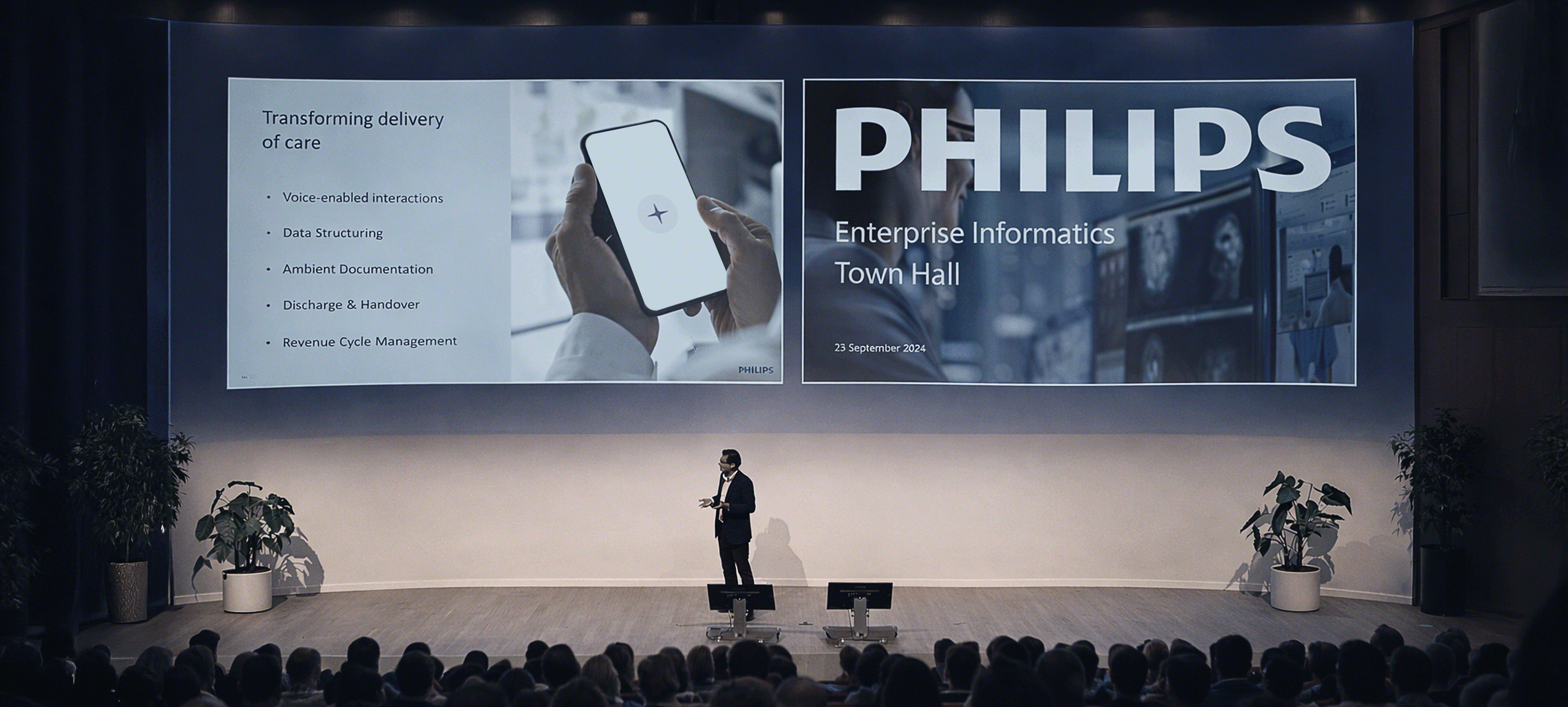
I led the design of a Zero-UI, voice-first clinical experience connected to SmartCare, anticipating the market shift toward ambient and conversational AI. The work focused on designing voice interactions, fallback visual cues, and system feedback that could operate without constant screen attention.
We explored conversational flows, error handling, trust signals, and multimodal transitions to ensure reliability, safety, and clarity in real clinical workflows.
My role
I acted as design lead while remaining deeply hands-on throughout the process. I defined the Zero-UI vision early, anticipating broader market and platform movements toward voice and ambient AI, and personally designed the core interaction models, conversational flows, and UX behaviors.
I worked closely with product and engineering to validate feasibility, iterate through prototypes, and translate the vision into executable designs aligned with clinical constraints.
Outcomes
Established a Zero-UI interaction model for AI-driven clinical care
30–45% reduction in interaction time for routine clinical actions, by enabling hands-free, voice-first workflows
25–40% reduction in screen dependency during high-pressure tasks, lowering cognitive and visual load
20–30% faster task completion in scenarios requiring multitasking or sterile conditions
Reduced error recovery time, supported by conversational confirmations and clear AI feedback loops
Improved clinician trust and adoption, driven by explainable responses, predictable behavior, and human-override controls
Established a scalable Zero-UI interaction model reusable across future AI and ambient care experiences