Driving Proactive Emergency Care at Scale
Digital Health
Ambient AI
Conversational UX
Hands-Free Interaction
AI Trust & Explainability
Real-time Data Trust
Workflow Integration
Behavior
Efficiency System Orchestration
IF Design 26
User Experience & Health/Wellness
Problem
Emergency departments operate under constant pressure, yet critical patient information is only available upon arrival. This delay creates bottlenecks in triage, slows decision-making, and leaves clinical teams unprepared for urgent cases.
Patients face long waiting times and uncertainty, while hospitals rely on fragmented data and manual intake processes, limiting efficiency and accuracy in early-stage decisions.
The Work
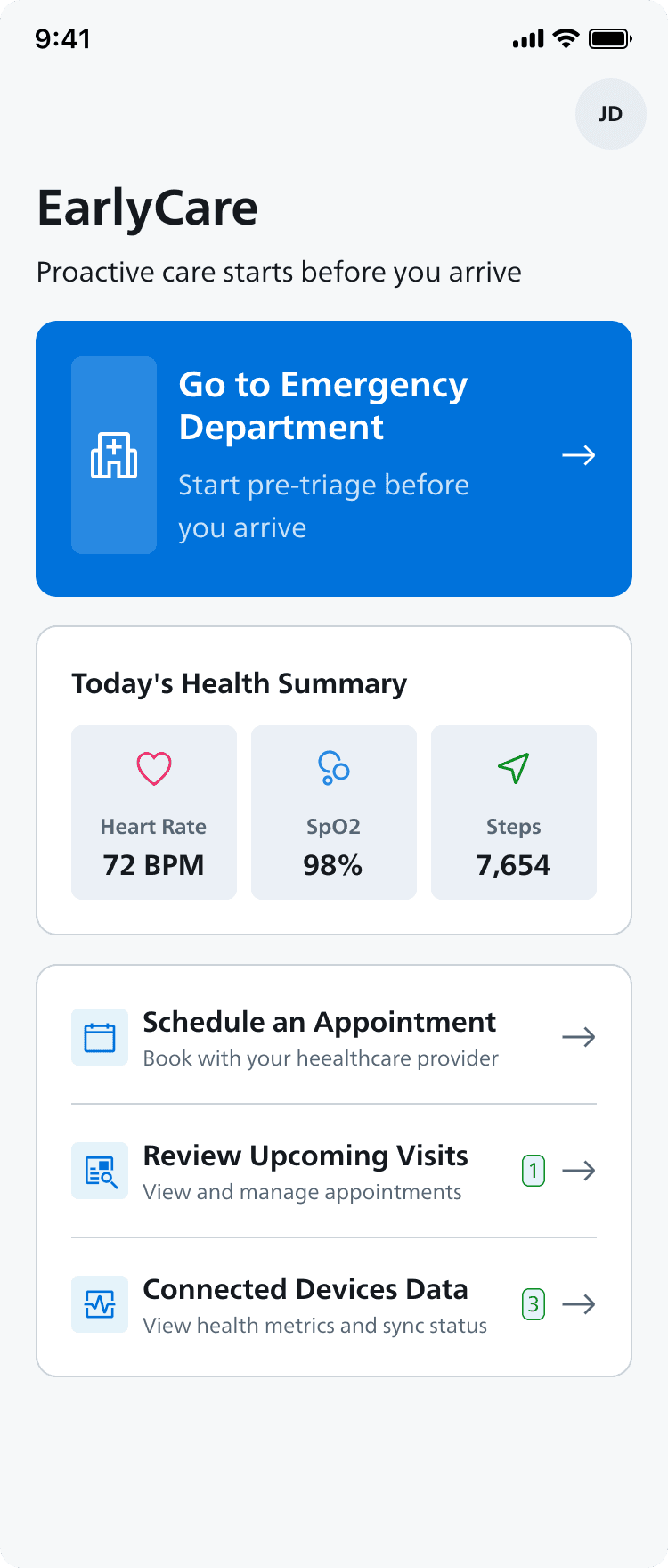
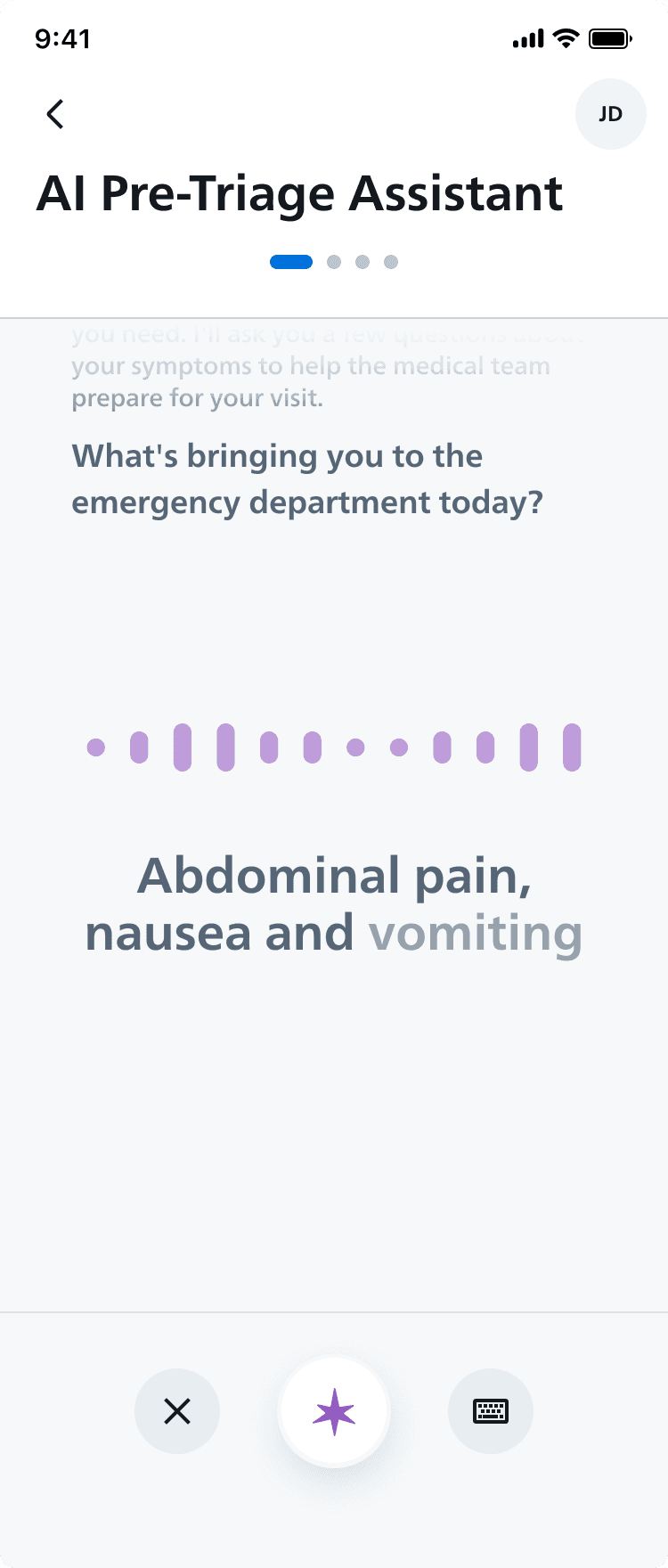
We redesigned emergency intake by shifting triage upstream — from hospital arrival to pre-arrival. Through journey mapping, co-creation with clinicians, and iterative prototyping, we built an AI-powered conversational system that collects, structures, and prioritizes patient data in real time.
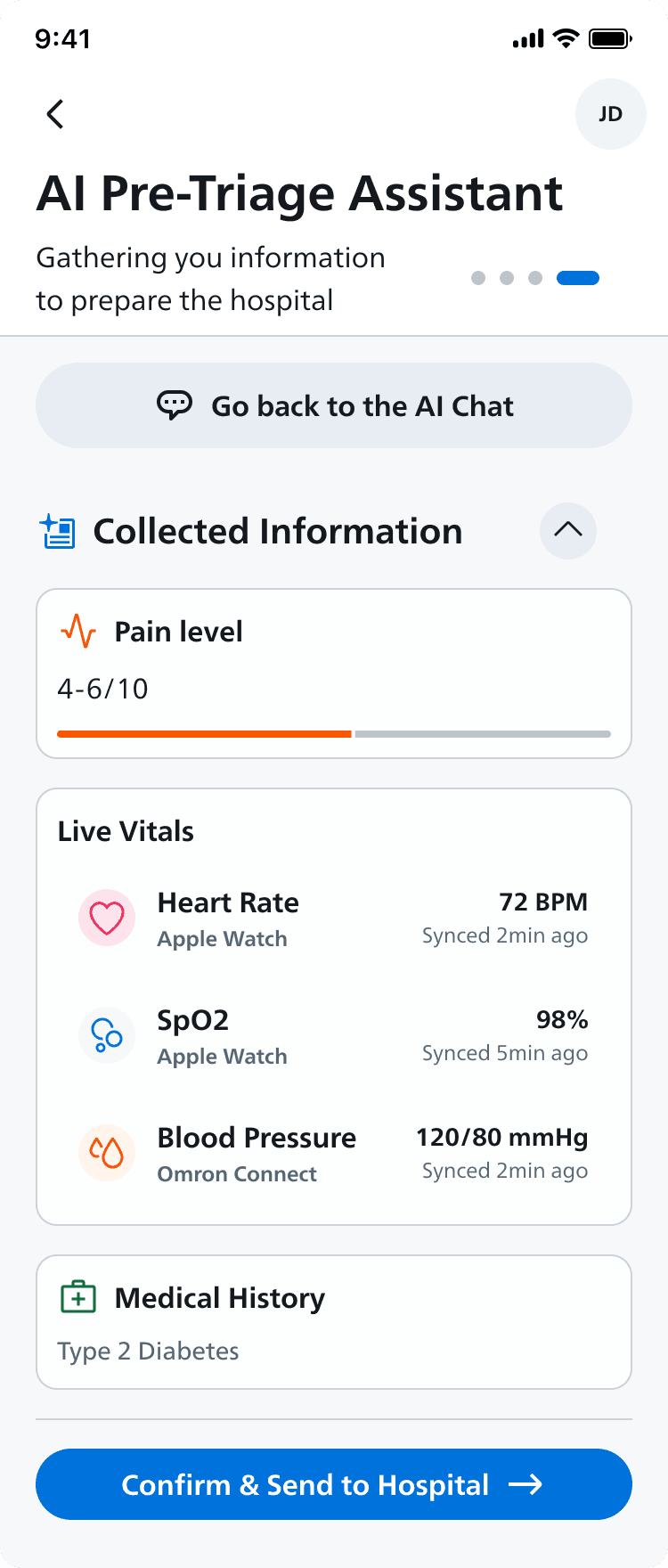
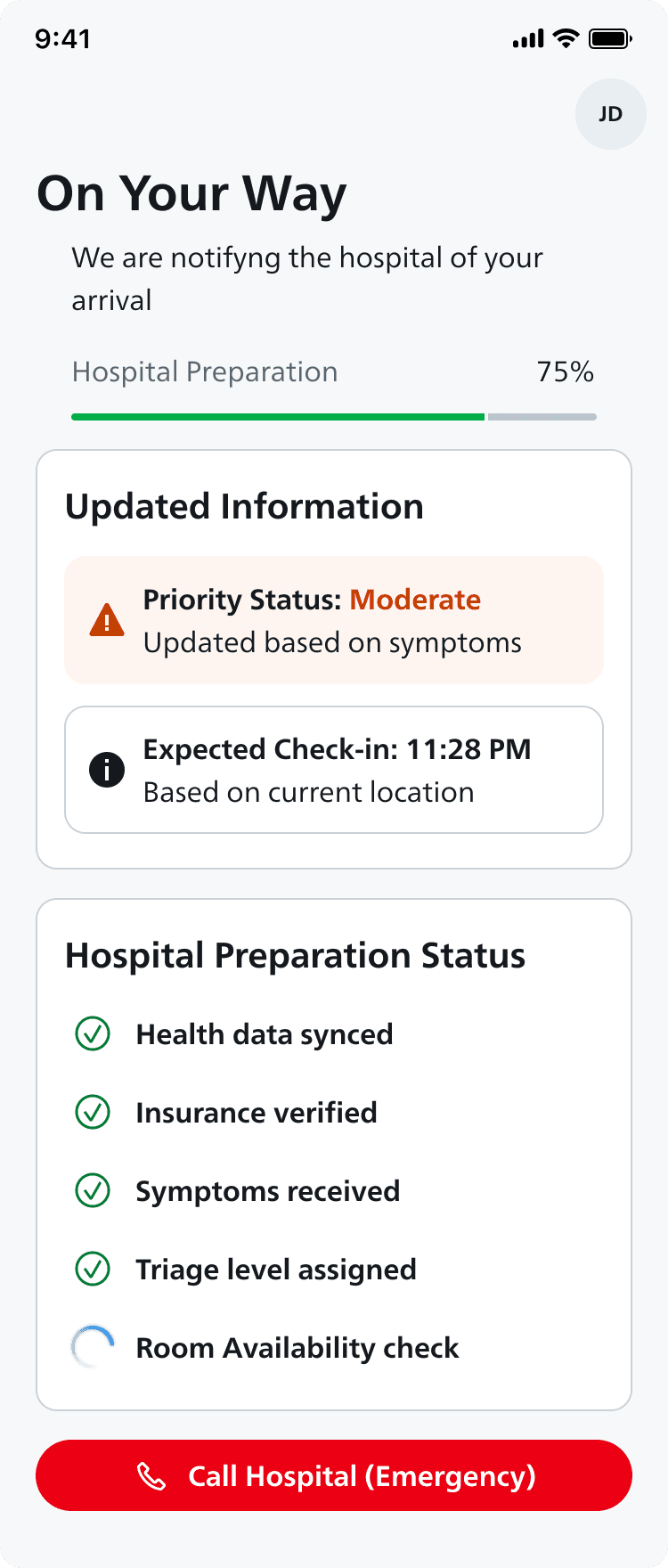
The solution integrates patient input, wearable signals, and medical history into a single flow, enabling hospitals to receive decision-ready information before the patient arrives. The focus was transforming intake from data collection into clinical readiness.
My role
I led and executed the design end-to-end, translating complex healthcare workflows into scalable, intuitive experiences.
I was directly involved in:
• Defining the product vision and interaction model
• Designing the conversational UX and triage flows
• Structuring information architecture for clinical clarity
• Applying behavior design principles to reduce friction under stress
• Creating scalable UI patterns aligned with healthcare standards
Alongside design, I worked closely with cross-functional teams to ensure the solution was not only usable, but operationally viable within real hospital environments.
Outcomes
The solution shifted emergency care from reactive intake to proactive preparation.
40–60% reduction in intake time at emergency departments
3–5× faster triage initiation through pre-arrival data availability
2× improvement in data completeness vs. traditional intake methods
30–45% decrease in patient waiting time variability
Significant reduction in manual errors through structured input